Our website contains links to partner sites. If you click from our site to the partner's site and purchase their services there, we will receive a commission for mediation (Find out more information). This form of cooperation does not affect the objectivity of our reviews. With each purchase made through links from our site, you support our editorial office so that we can create quality and useful content in the future. Thank you.

Your Holiday Shopping Emails Are Watching You. Proton Analyzed 50 Brands to Prove It.
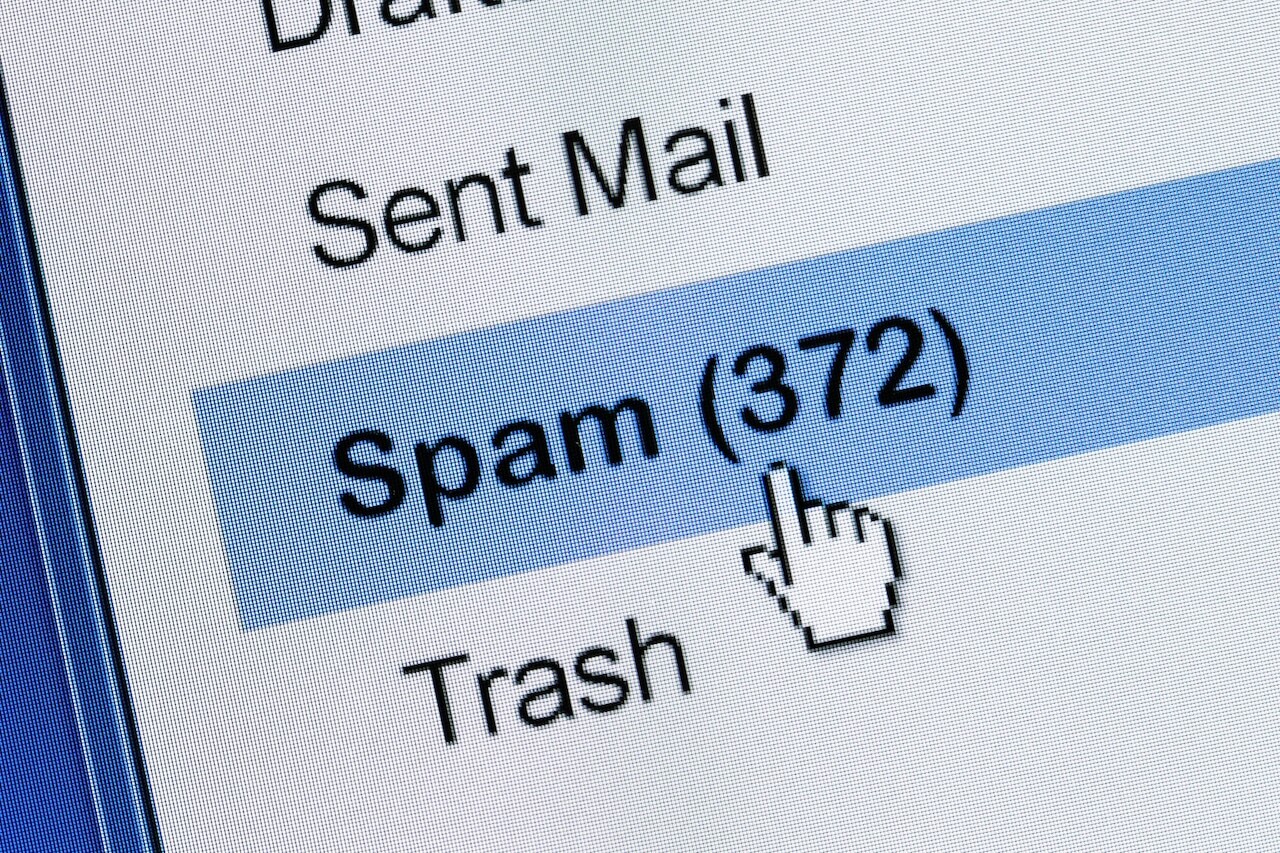
Every year, it’s the same story. As the holidays approach, your inbox transforms. What was once a manageable stream of messages becomes a torrent of promotions, last-chance deals, and urgent reminders. Most of us just sigh and accept it as the cost of modern life—the digital equivalent of crowded shopping malls in December. It feels normal.
But beneath the surface of those flashy subject lines and discount codes, something else is happening: a system of surveillance, operating silently inside the emails you open every day. This hidden machinery is what creates the feeling of being overwhelmed.
Most marketing emails aren’t just static messages; they are active intelligence-gathering tools. They contain invisible trackers that report back to the sender the moment you open them. They log what time you read the message, the device you’re using, and sometimes even your general location. This data feeds an algorithm that decides when and how to email you next, optimizing for the perfect moment to grab your attention. During the holiday shopping season, this system goes into overdrive.
To understand the true scale of this practice, the team at Proton created Spam Watch: The U.S. Inbox Overload + Hidden Tracker Report. It’s a controlled analysis of how 50 of the largest U.S. retail brands use email to track and target consumers during the busiest shopping period of the year. The findings paint a clear, and frankly, unsettling picture.
You can read the complete findings in the full report here: Proton Mail Spam Watch 2025 – The U.S. Inbox Overload + Hidden Tracker Report.
How The Investigation Worked
Transparency is key, so it’s worth understanding how this data was collected. A dedicated Proton Mail test inbox was set up—[email protected]—and subscribed to the mailing lists of 50 major U.S. retail brands.
For every email that arrived, the team recorded:
- The sender and subject line
- The exact date and time it was received
- The number of hidden trackers detected inside
- Broader daily and weekly sending patterns
This was possible because Proton Mail is designed to identify and neutralize these surveillance tools. Features like remote content blocking, invisible pixel protection, and link cleaning (which strips tracking parameters from URLs) provide a clear window into what’s happening behind the scenes. These tools provided a consistent, measurable way to analyze both the volume and the intensity of email tracking.
The analysis focused on three key timeframes to see how behavior changed:
- Pre–Black Friday (Nov 4 → Nov 27): This established a baseline for typical seasonal sending.
- Holiday Shopping Peak (Nov 28 → Dec 1): This covered the intense period from Black Friday through Cyber Monday.
- Full Analysis Period (Nov 4 → Dec 1): All rankings and primary findings are based on this complete window.
What The Data Revealed
The results confirm what many have suspected: the feeling of being overwhelmed by email is not a personal failure of organization. It is an engineered outcome.
The data shows a clear and aggressive strategy from most major retailers.
- An astonishing 80% of the brands embedded trackers in 100% of their marketing emails. This isn’t an occasional practice; it’s standard operating procedure.
- During the holiday peak, the sheer volume of email surged by 93%.
- Home and décor brands were the most aggressive overall, combining high frequency with a large number of trackers.
- Lingerie and intimates brands packed the most trackers into each message.
- Department stores were the champions of frequency, sending multiple emails per day.
Your inbox isn’t messy because you’re bad at managing it. It’s crowded because you are being constantly monitored and re-targeted by automated systems.
Which Brands Were The Worst Offenders?
Some brands were far more invasive than others. By multiplying the average number of emails sent per day by the average number of trackers in each email, we created a score that captures the total daily surveillance load. By this measure, these brands stood out.
Overall Daily Tracker Load (Frequency × Trackers)
- CB2 – Score: 27.39 (13.00 trackers/email × 2.11 emails/day)
- Anthropologie – Score: 24.31 (12.90 trackers/email × 1.88 emails/day)
- Victoria’s Secret – Score: 21.75 (13.84 trackers/email × 1.57 emails/day)
- VS Pink – Score: 16.00 (14.00 trackers/email × 1.14 emails/day)
- Crate & Barrel – Score: 15.71 (7.86 trackers/email × 2.00 emails/day)
- kate spade – Score: 12.00 (5.51 trackers/email × 2.18 emails/day)
- Pottery Barn – Score: 11.25 (5.00 trackers/email × 2.25 emails/day)
- DICK’S Sporting Goods – Score: 9.82 (3.31 trackers/email × 2.96 emails/day)
- Lowe’s – Score: 9.73 (4.42 trackers/email × 2.20 emails/day)
- Urban Outfitters – Score: 9.00 (4.00 trackers/email × 2.25 emails/day)
- J. Crew – Score: 8.16 (8.50 trackers/email × 0.96 emails/day)
- Aerie – Score: 7.71 (9.00 trackers/email × 0.86 emails/day)
- Ulta Beauty – Score: 6.50 (12.00 trackers/email × 0.54 emails/day)
- NORDSTROM – Score: 6.00 (2.90 trackers/email × 2.07 emails/day)
- JCPenney – Score: 5.89 (3.00 trackers/email × 1.96 emails/day)
A Closer Look At The Tactics
Not all brands use the same strategy. Some rely on sheer volume, while others pack a heavy surveillance punch into fewer messages.
The Most Frequent Senders
These brands sent messages multiple times a day, constantly fighting for a spot at the top of the inbox.
- LOFT – 3.62 emails/day
- Macy’s – 3.52 emails/day
- Neiman Marcus – 3.32 emails/day
- DICK’S Sporting Goods – 2.96 emails/day
- Ann Taylor – 2.88 emails/day
The Highest Tracker Density
These retailers specialized in packing each email with an unusually high number of trackers, sometimes more than a dozen per message.
- VS Pink – 14.00 trackers per email
- Victoria’s Secret – 13.84 trackers per email
- CB2 – 13.00 trackers per email
- Anthropologie – 12.90 trackers per email
- Ulta Beauty – 12.00 trackers per email
The Biggest Inbox Flooders
This metric captures pure chaos: the maximum number of emails a single brand sent in one 24-hour period during the holiday rush.
- Macy’s – 7 emails in one day
- LOFT – 6 emails in one day
- Bass Pro Shops – 6 emails in one day
- Saks OFF 5TH – 6 emails in one day
- Ann Taylor – 5 emails in one day
Deeper Patterns And A Glimmer Of Hope
Looking at the data as a whole revealed several trends. Home décor and luxury home brands like CB2, Crate & Barrel, and Pottery Barn were “double threats,” combining high frequency with high tracker density. Lingerie brands like VS Pink, Victoria’s Secret, and Aerie consistently topped the charts for surveillance intensity. And department stores, from Macy’s to LOFT, dominated with sheer volume.
But there was some good news.
The study proves that this level of surveillance isn’t necessary to run a successful retail business. H&M, TJ Maxx, Burlington, Bass Pro Shops, and New Balance sent zero emails with trackers.They managed to communicate with their customers without spying on them.
However, no major U.S. retailer managed to meet the “Proton Gold Standard”—a combination of zero trackers and a respectful sending volume of less than one email every two days. Privacy-respecting email marketing is entirely possible, but the data shows almost no one is doing it.
Of course, email is just one frontier. This kind of tracking is part of a much larger data collection ecosystem that follows you across the web. To protect your broader online activity from prying eyes, using a virtual private network is essential. A thorough review of Proton VPN shows how this technology can shield your IP address and encrypt your internet traffic, making it much harder for advertisers and other third parties to build a profile of you.
You Can Have A Better Inbox
The findings from Spam Watch 2025 highlight a simple but powerful truth: you are not the problem; the system is. Widespread, hidden tracking is the engine that drives inbox overload.
Services like Proton Mail are built to dismantle that engine. By default, it blocks tracking pixels and cleans tracking parameters from links, stopping the surveillance before it starts. When marketers can’t see when or if you open their emails, their ability to relentlessly re-target you is diminished. The result is not only a more private inbox but a quieter, more manageable one.
A better inbox, free from constant surveillance, isn’t a fantasy. This data shows exactly why your inbox feels so overwhelming and provides a clear path to reclaiming your digital space. It’s about choosing tools that put your privacy first.